
Pressure Washing vs. Soft Washing: What’s the Difference?

Homeowners often use the terms pressure washing and soft washing interchangeably, but they’re actually two different exterior cleaning methods. Choosing the right one matters—not only for getting a surface clean, but also for protecting your home from unnecessary damage.
At TLC Pressure Washing, we choose the cleaning method based on the surface, its condition, and the type of buildup we’re removing. Siding and roofing require a much different approach than concrete driveways and sidewalks.
So, what’s the difference between pressure washing and soft washing, and which one does your property need? Here’s what homeowners in Wake Forest, Raleigh, Rolesville, and surrounding North Carolina communities should know.
What Is Pressure Washing?
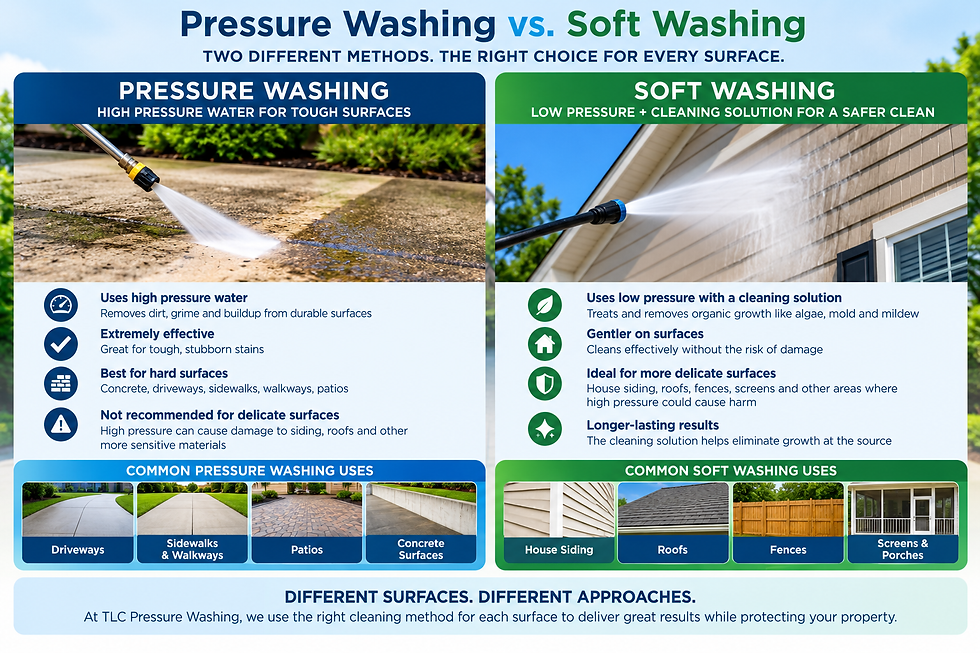
Pressure washing uses pressurized water to remove dirt, grime and buildup from durable exterior surfaces. It can be extremely effective, but more pressure does not necessarily mean better cleaning.
We typically reserve pressure-based cleaning for harder surfaces that can tolerate it, such as concrete driveways, sidewalks, walkways and certain patios. Even on these surfaces, the amount of pressure and the cleaning technique should be appropriate for the material and its condition.
Using excessive pressure or the wrong technique can leave permanent marks, damage a surface or produce uneven results. That's one reason professional exterior cleaning involves more than simply pointing a pressure washer at something and pulling the trigger.
What Is Soft Washing?
Soft washing uses low pressure combined with a cleaning solution to remove organic growth and buildup from exterior surfaces. Instead of relying on water pressure to do most of the cleaning, the solution treats the buildup so it can be removed with much less force.
This makes soft washing especially useful for surfaces where high pressure could cause damage. At TLC Pressure Washing, we commonly use a soft-wash approach for house siding and roof cleaning, as well as other surfaces where a gentler method is appropriate.
The important difference is that soft washing isn't simply “pressure washing at a lower setting.” It's a different cleaning approach designed to let the cleaning solution do much of the work while minimizing the amount of pressure applied to the surface.
Pressure Washing vs. Soft Washing: Key Differences
Pressure washing and soft washing can both produce excellent results, but they accomplish the job differently. The right method depends on the surface being cleaned and the type of buildup present.
Pressure washing relies more heavily on water pressure and is generally best suited for durable surfaces such as concrete driveways, sidewalks and certain patios.
Soft washing uses much lower pressure along with a cleaning solution that treats organic growth such as algae, mold and mildew. This makes it a better choice for many exterior surfaces that could be damaged by excessive pressure.
The goal isn't to choose one method over the other for every job. It's to use the safest and most effective method for each surface.
Which Surfaces Should Be Pressure Washed?
Pressure washing works best on durable surfaces that can withstand higher water pressure. At TLC Pressure Washing, we evaluate the material and its condition before deciding how much pressure is appropriate.
Common surfaces that may be pressure washed include:
Concrete driveways – Pressure washing can remove embedded dirt, grime and organic buildup from durable concrete surfaces.
Sidewalks and walkways – These high-traffic areas often collect dirt, algae and other buildup over time.
Concrete patios – Proper pressure and technique can restore the appearance of many concrete patio surfaces.
Other durable masonry surfaces – Depending on the material and its condition, certain brick, stone and masonry surfaces may also be appropriate for pressure washing.
Which Surfaces Should Be Pressure Washed?
Soft washing is best suited for exterior surfaces that need a gentler cleaning approach. Instead of relying on high water pressure, the cleaning solution treats organic growth such as algae, mold and mildew so it can be removed with much less force.
Common surfaces that may be pressure washed include:
House siding – Vinyl, painted siding and other exterior finishes can often be cleaned effectively without exposing them to unnecessary high pressure.
Roofs – Asphalt shingles and other roofing materials require a low-pressure approach to remove organic growth without damaging the surface.
Fences – Wood, vinyl and other fence materials can benefit from a gentler cleaning method appropriate for the material.
Screened porches – Screens, frames and surrounding surfaces are generally better suited to controlled, lower-pressure cleaning.
Other delicate exterior surfaces – The appropriate method depends on the material, condition and type of buildup present.
At TLC Pressure Washing, we don't automatically use the same method everywhere. We adjust the cleaning process to the surface so we can get it clean while helping protect the material underneath.
Why Homes Are Often Soft Washed Instead of Pressure Washed
When homeowners say they want their house “pressure washed,” what they usually want is a clean exterior—not necessarily high pressure applied to their siding. For many homes, soft washing is the better approach.
High pressure can force water behind siding, damage finishes, disturb caulking or leave visible marks if it's used incorrectly. Soft washing allows the cleaning solution to treat the organic growth and buildup while using much less pressure on the home's exterior.
This is especially important on vinyl siding and other exterior materials where the goal is to remove algae, dirt and discoloration without unnecessarily stressing the surface.
The same principle applies to roof washing. A roof should not be treated like a concrete driveway. Different surfaces require different cleaning methods, which is why TLC evaluates each area before deciding how to clean it.
How TLC Chooses the Right Cleaning Method
Every exterior cleaning job is a little different. Before we begin, we look at the type of surface, its condition, the kind of buildup present and the safest way to clean it.
A property may require more than one cleaning method. For example, a home's siding may be soft washed while the concrete driveway is cleaned using a pressure-based approach. Using the appropriate method for each surface helps us get better results without applying unnecessary pressure.
That's why we don't believe in a one-size-fits-all approach. At TLC Pressure Washing, the goal is simple: use the right process for the surface, get it clean and treat your property with care.
Is Soft Washing Better Than Pressure Washing?
Neither method is automatically better than the other. The better method is the one that's appropriate for the surface being cleaned.
Soft washing is generally the better choice for siding, roofs and other surfaces that could be damaged by excessive pressure. Pressure washing is often more appropriate for durable surfaces such as concrete driveways, sidewalks and walkways.
In many cases, a professional exterior cleaning job uses both methods on the same property. What matters most is knowing where each method should—and shouldn't—be used.
Choosing the Right Exterior Cleaning Method for Your Home
Homes in North Carolina deal with plenty of conditions that can leave exterior surfaces looking dirty or discolored. Humidity, shade, trees and changing weather can contribute to algae and other organic growth on siding, roofs, concrete and other outdoor surfaces.
For homeowners in Wake Forest, Raleigh, Rolesville and surrounding communities, the best cleaning method depends on what you're cleaning—not simply how dirty it looks. Siding, roofing and concrete may all need different approaches, even when they're part of the same property.
If you're unsure whether an area should be pressure washed or soft washed, that's something we can determine before the work begins. We'll look at the surface and recommend the cleaning approach that makes the most sense for your property.
Need Help Choosing the Right Cleaning Method?
You don't need to know whether your property needs pressure washing, soft washing or a combination of both before contacting us. That's our job.
TLC Pressure Washing provides professional exterior cleaning for homeowners throughout Wake Forest, Raleigh, Rolesville and surrounding areas. We'll evaluate the surfaces you want cleaned, explain the approach we recommend and provide a custom quote based on your property.
Ready to get your home's exterior looking clean again? Request a free custom quote or call us at 919-807-1266 to get started.